Powered By Blogger
Showing posts with label Costa Rica. Show all posts

Wednesday, April 21, 2010

Monumento Nacional Guayabo

On our way to limon we stopped at Guayabo National Monument, on the sides of the smoking Turrialba Volcano. The monument is home to the most imporant archeological site in Costa Rica. It contains the remains of numerous towns and their artifacts and also protects a large portion of temporate rain forest that is home to many tropical creatures. The towns located here were already abandoned when the Spanish arrived in the sixteenth century, but evidence suggests that their cities were once an extremely important religous sites for tribes of peoples ranging from Colombia to Guatemala. Satelite photos have revealed markers and networks of roads that lead to this quiet mountain side from all over Costa Rica.

The sight has also been decalred a World Heritage Engineering site due to its complex system of aqueducts (Seen to the right is one of the source fountains). The aqueducts are still working today, which is sort of ironic in a country where there are still days where parts of the city go without water or electricity for entire mornings and afternoons. The complex system of source fountains, filtration, and holding containers that brought water to various points and homes throughout the towns.

The short hikes there provide some spectacular views of the sites in its entirety and reveal diffent graves and monoliths that dot the hill sides. Sadly a large portion of the artifacts have been removed from there resting places and a few can be found in the National Museum in San Jose. Depsite its being picked over what remains is impressive and bas been compared to sites such as the famous Machu Picho of Peru making it well worth the while despite its being a little off the beaten path.


Model of how the town used to be

Tombs


Provincia de Limon

Our trip to Punta Uva was our very first to the Caribbean side of Costa Rica (so that is the sunrise above). The beaches there are widely regarded by most Costa Ricans to be the most beautiful in the country. After passing a couple of days in Punta Uva's white sand, calm surf, and perfectly clear water it is hard to disagree. Despite the renowned beauty, often the eastern province of Limon considers itself to be largely forgotten by the booming tourist industry which sends most of its business to the northwest in Guanacaste. Nevertheless, it is truly a blessing in disguise seeing as how the lack of steady tourism leaves the beaches clean and quiet and perfect for a day or two of relaxation. The shore is also packed full of wildlife, we spent time chasing crabs, watching birds, and even came across a rare Hercules beatle. We also spent some time exploring small tide pools that acted like natural aquariums for the tiny fish starting their lives there. The other beaches around the cities farther north may not always be as clean as the southern most beaches but are still better than some on the Pacific coast.

We also had the opportunity to spend a short evening in Puerto Viejo where we were able to experience the heavy Rastafarian and Jamaican influence. Limon is as famous for its beaches as it is for is Caribbean way of life. There you will find the population of Afro-Caribbean peoples who immigrated to Costa Rica to work on the construction of railroads during the 1870's and 1880's. Their Jamaican heritage is particularly present in the food, music, and abuse of marijuana that is prevalent in the urban areas. Nevertheless, while some drug problems exist, as tourists we had no issues and ultimately enjoyed our short stint in the town of Puerto Viejo where we enjoyed listening to some reggae while sipping on cervezas at the beach bar.

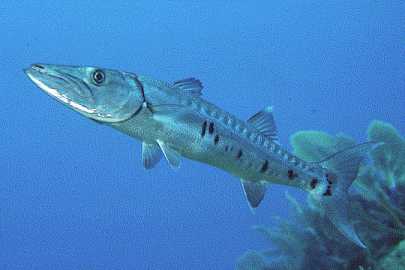
Our last day in Limon was spent at Cahuita National Park where we went snorkeling along some of the parks famous reefs. The coral reefs at Cahuita are the largest in the country and provide some of Costa Rica's best snorkeling. Sadly, a huge portion of the reefs have disappeared over the past 50 years mostly due to damage done by humans and agriculture but also by a 1991 earthquake that forced the sea floor upwards exposing large portions of the reef that eventually resulted in their death. What reefs remain support a great variety of sea creatures including many species of fish, sharks, and sting rays along with 27 species of coral. In our snorkeling adventure we were startled by a barracuda, two nurse sharks, and a handful of sting rays skating along the sandy ocean floor. A few species of sea turtles also make their home at Cahuita, however, we didn't stumble upon any during our time there. In a month or so they will begin laying their nests in the parks sand and we will regrettably be back home in Michigan. Either way, it leaves us something to return for and I know Limon will definitely be one of the places I will go back to during my next trip to Costa Rica.


The island where Cristopher Columbus landed and discovered Costa Rica in 1502.


Pictures below are from Google but give you an idea of what we saw while Snorkeling


Monday, April 12, 2010

Semana Santa and Jacó

Sorry this post is coming late.... but, hey, we have been sort of busy! Semana Santa, on the other hand, was not so eventful. Although, we did get to participate in one of the towns more lively holy week processions. The procession began with a church service at the cathedral in Santa Ana central and made its way slowly and hour and a half up to another cathedral in a different part of town. The procession was lead by the drum beats of a small band of men fully adorned in Roman solider costumes. A few hundred people showed up to follow the soldiers and walk among the wooden sculptures of Jesus, the Virgin Mary, and Saints Peter and Paul. Amidst the people a minivan outfitted with large speakers and microphone lead us faux pilgrims in hymns as we walked. It was a serene and meditative experience as most people walked in silence hand in hand our arms around their children and loved ones, and while some of group members didn't complete the walk in its entirety, I am glad that a few of us stuck it out.

Later in the week, lacking plans for Easter, we decided to make our way to the nearest beach, Jaco. While I have never heard anything to nice about Jacó from Ticos I found myself pleasantly satisfied with our day spent there. Unlike Costa Rica's nicest beaches the shore is mostly lined with high rise condos and hotels. There are, however, a few smaller places offering more plenty comfortable and more economic lodging options. Restaurants tend to be a tad more expensive but if you look hard enough you can find some great places right on the beach serving high quality seafood at decent prices. At night we walked the main drag and wandered in and out of the shops, each one selling the exact same goods, and pondered how they individually made enough money to support their owners. All things considered Jaco makes for a perfect day or two day trip from San Jose if your looking for a beach seeing as how with the new highway it is less than an hour away.

Better yet that Jaco was our morning spent at Playa Herradura, Jacó's quiet neighbor. Herradura is home to merely one luxury resort on its northern end with virtually no civilization along it's southern few kilometers. Only 20 minutes north of Jacó, it is a great place to get away from busy tourist industry and truly enjoy Costa Rica's sun and sand. While the central Pacific beaches may not be the best they are the easiest to get to and from when you are in the San Jose area, and Herradura is a great example of a more typical Costa Rican time you can spend there.


Wednesday, February 17, 2010

Miravalles

Even though Monteverde would have been enough travel and fun for the weekend, Don Jorge thought we should do some more, so we headed to nearby volcano Miravalles (seen above).

Upon arrival at our hotel we were able to bathe in their over sized hot tubs filled with natural hot spring water. The pools varied in heat so it was easy to find the most comfortable place. They also had a sweet water slide for us to use even thought I bet it was for smaller children then us.

The following morning we made our way to the base of the volcano. There we went horseback riding, went on a short hike, bathed in a waterfall, and then soaked ourselves in hot mud. We took hot mud baths at series of hot springs and fumaroles that were sort of like a miniature Yellowstone. The hot mud was supposed to refresh our skin. It just sort of left my skin sort of dry and made me smell a little bit like sulfur. However, afterward we were able to once again bathe in some more natural hot springs, which removed most of the smell.

Only one other group in the Aquinas program's history has had this experience, so I'm glad Don Jorge was feeling ambitious this weekend so that we didn't miss out on all Miravalles had to offer.

Tuesday, February 16, 2010

Monteverde

Monteverde is a refuge located in Costa Rica's famous cloud forest, which is named justly seeing as how is almost constantly immersed in fog and rain. This constant abundance of moisture makes it one of the most bio-diverse places on the planet. As we hiked to the highest points of the refuge we watched the clouds role over the tops of the mountains as thought they were waves on the beach. Nearly every surface of the forest is covered in a green coat of moss, ferns, or leaves. Monteverde also lies along the continental divide that runs from northern Canada down to the tip of South America.

As part of our weekend stay in Monteverde we did a Canopy Tour in an area apart from the reserve. This unique form of ecotourism lets you take zip lines through and over to of the cloud forest. It was pioneered in Costa Rica and has understandably become an important and extremely popular activity for adventurers who make their way to Monteverde.

Within the same park as the canopy tour we visited a butterfly vivarium as well as a hummingbird garden. Within the butterfly vivarium we were able to take photos of a a few of Costa Rica's thousands of species of butterflies. The newly hatched ones from their cocoons would even climb write onto your hands. Other more lively butterflies would sporadically land on our clothes or let us sneak up close and take photos as they sucked nectar from fruit plates strewn about the greenhouse.

In the hummingbird garden we hung around different sets of feeders as the birds zipped between our heads and perched themselves within a few feet of our cameras. Monteverde is home to more than 20 species of hummingbirds most of which we were able to see at within the garden as they dipped their slim beaks into the feeders. Then just as we were about to leave one of the birds perched itself atop the feeder well with in reach of my hand, so I slowly reached out and touched it for a moment then ran away quickly out of fear that it might pluck my eyes out with its slender yet sharp beak.

Monteverde is truly one of Costa Rica's greatest treasures with an abundance of flora and fauna and a variety of creative ways to experience it all.


Hanging out on the Continental Divide.

Wednesday, February 10, 2010

Brighter Side of San Jose


Although San Jose is not one of the worlds greatest metropolises, the National Theater, Museum, as well as some of its parks show that is very much worthy of at least a day's worth of exploring. We headed there as part of our History of Culture class yesterday, and I found the experience enlightening and extremely enjoyable.

As demonstrated by the National Museum, Costa Rica has a rich cultural history. The collection of Indigenous artifacts and artwork show how the lesser known indigenous peoples of Central America were equally as developed as their Mayan, Aztec, and Incan counterparts. Their detailed ceramics and sculpture reveal a complex culture with deep ties to their natural surroundings. The museum is also home to some of the strange spheres that were first found in the Diquis Delta in the 1930's by a banana company. Theories on their origins range from Atlantis to aliens, though they are probably just another example of incredible ingenuity on the part of Native Americans. In addition to the rich indigenous culture, the museum presented the entirety of Costa Rican history from the colonial period onward. Through the brief captions, maps, and bountiful items of historical importance we furthered our understanding of how Costa Rica has come to be what it is today.

Our next stop consisted of the Paque Nacional, which is home to Costa Rica's most important monument. The sculpture in the center of the park depicts the 5 nations of Central America pushing forward as the notorious William Walker cowers away in defeat. Men like William Walker were known as "filibusters" or "freebooters." Filibusters were Americans who engaged in unauthorized military expeditiosn in a foreign nation for financial gain, adventure, or a belief in manifest destiny. Walker attempted to conquer Central America after successfully conquering Nicaragua. He was defeated by Costa Rica in a series of battles in 1856; hence, in the sculpture you see Costa Rica holding her sword forth ward as she aids Nicaragua who is being carried under her arm.

We then made our way into the old National Factory of Liquors which currently houses a dance school as well as some art displays. We checked out a contemporary art display dealing with immigration within and outside of Latin America and how it has become a part of life. Unfortunately there were no photos allowed, so I will spare you any lengthy descriptions of the pieces on display.
We then strolled through Parque España and Morazán before making our way to El Teatro Nacional. The theater was constructed in 1897 and pays homage to Costa Rica's European roots by embracing the Neoclassical architecture of the Renaissance. Sculptures found atop and within the theater are reminiscent of those of Hellenistic Greece and ancient Rome. The most Costa Rican aspect of the theater was the multicolored wood floor of the foyer which is made from the countless types of tropical hardwood found in the many different types of forest here. The theater is an important piece of cultural heritage for Costa Ricans. It was bought and paid for by coffee farmers working together with the government, so that they may have a cultural center for the many traveling operas, orchestras, symphonies, and theater troupes of Europe, the U.S., and their fellow Latin Americans.

Finally, we finished our day with lunch at the Grand Hotel of Costa Rica located across from the theater. San Jose proved to have a lot to offer travelers today. As long as you are willing to learn a little history and do a little walking San Jose is great one day stop for any Costa Rica vacation.


Tuesday, February 2, 2010

Cathedrals Old and New


After a cup of coffee atop Irazú, we made our way back down the mountain into the city of Cartago. First we visited the ruins of an old cathedral that had been destroyed by an earthquake in the nineteenth century. The ruins are also home to a creepy legend that states every foggy night in Cartago a priest can be seen wandering around the cathedral. He has been condemned to do so for eternity as punishment for having an affair with a local woman and then murdering her thereby defiling the church itself.

Afterwords we headed a few blocks down the a Byzantine style church known as Basílica de Nuestra Señora de los Ángeles. This basilica is the site of the patron saint of Costa Rica known as La Negrita. As the story a goes a young girl found the a doll one day as she was collecting wood outside the city. She brought it back to her room and stored it away. The next day she was back out in the woods and found the another doll upon the exact same rock, so she took that back to her room to store it away with the other only to find the other had disappeared and that she was holding the exact same doll. She informed the local priest who also put aside the doll to look at it later, but when he went to do so it had disappeared and reappeared on the same rock once again. The priest took those to be a sign of divinity and a desire by the virgin to have a cathedral built on that location. However, the cathedral was not built on the site where the doll was first found until many years later after the destruction of the original cathderal. Many beleive that the destruction was a sign from the virgin to build the new cathedral at the current site. The doll as well as the rock upon which she was found remain with in the cathedral to this day. Year round Costa Ricans as well many other Catholics make pilgrimages to the sight to pray to La Negrita and receive her blessing and healing. Visitors walk along the central nave on their knees praying until they reach the alter where the doll is currently housed. The cathedral is home to countless charms that are supposed to represent individual miracles related to the healing of individuals. Witnessing the old and young as they demonstrated their faith in god, the church, and their patron saint by making their way down the aisle along their knees paired with the stories of healing and showings of gratitude via the charms made our visit to Basílica de Nuestra Señora de los Ángeles a profound experience.

Afterwords we visited yet another cathedral this time in the river valley of Orosi. Also in ruins, the cathedral of Ujarrás is actually Costa Rica's oldest. We made this a short visit however in order to make it to lunch more quickly. We ate at buffet down by the beautiful lake located in the center of the valley. At this restaurant they made coffee using a sort of old style coffee maker. Where they poured hot water through a canvas sack filled with freshly ground beans, it was easily the best cup of coffee I have had here yet.
Finally, after lunch we came to our last stop of the day, which turned out to be another cathedral. This colonial cathedral, however, is still standing. Inside were paintings from Mexico, sculptures from Guatemala, and woodwork from Ecuador. The cathedral truly was representative of Hispanoamerican art as well as the age of Spanish imperialism and colonialism that brought Catholicism to the Americas. This past Saturday while busy, tiresome, and full of education proved to be an extremely rewarding experience.